The Royal Fabric: Piña and the Barong Tagalog
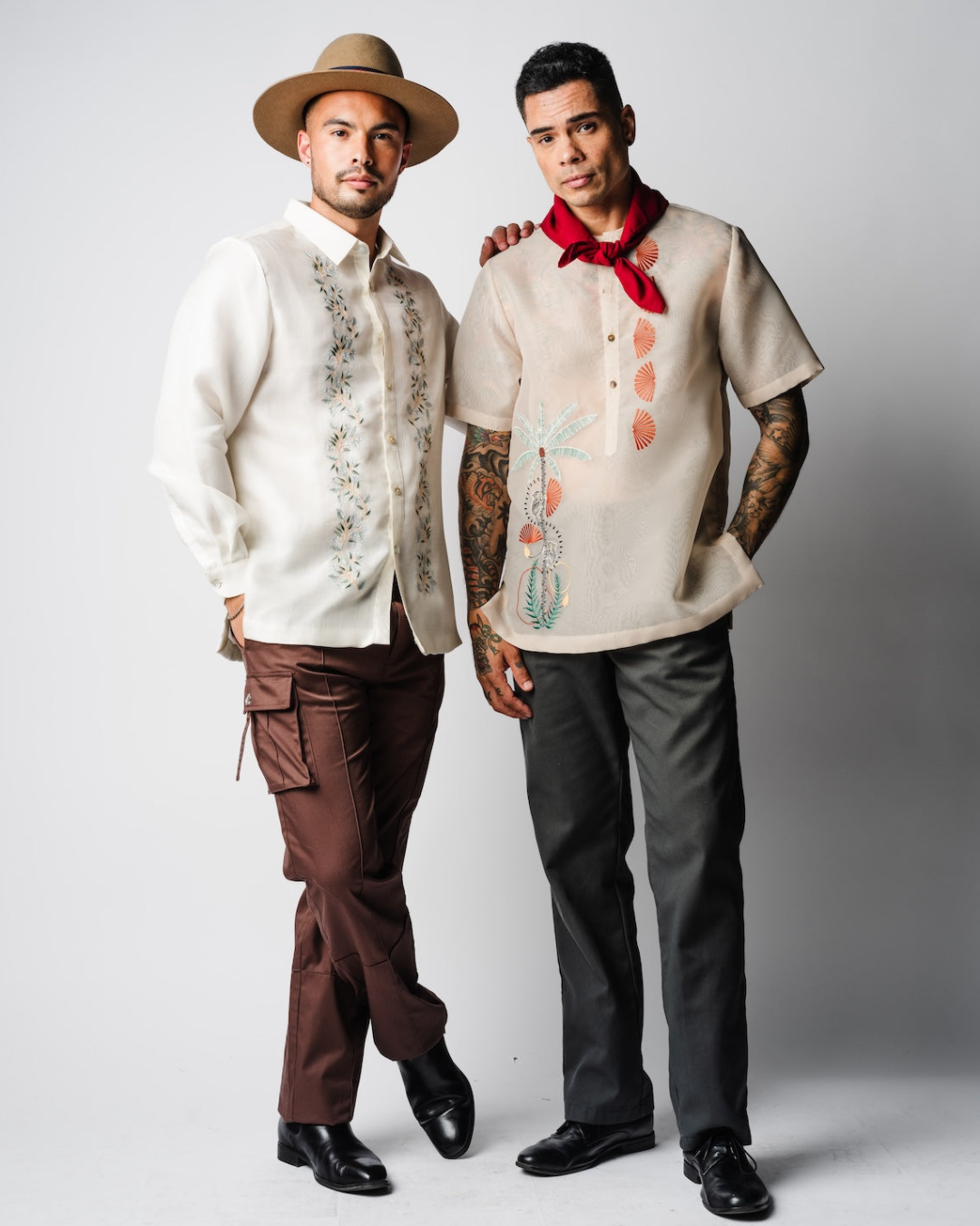
Pictured: a piña barong by The Mestizo, dyed black and worn with a printed scarf.
The Barong Tagalog, the Philippines' national attire, is a symbol of Filipino heritage and elegance. And when it comes to crafting a truly exceptional Barong, few fabrics can rival the exquisite beauty and historical significance of piña.
A Glimpse into Piña's Past
Piña fabric, derived from the fibers of pineapple leaves, boasts a rich and fascinating history. Here's a quick overview:
-
Origins:
- While pineapples originated in South America, they were introduced to the Philippines by the Spanish during the colonial era.
- Filipinos, already skilled in weaving with other plant fibers like abaca, adapted their techniques to this new material.
- The art of piña weaving flourished, particularly in Aklan, in the Western Visayas region.
-
A Symbol of Luxury:
- During the 18th and 19th centuries, piña fabric became highly prized, both locally and internationally.
- It was favored by the Filipino elite and even found its way into the wardrobes of European aristocracy.
- Piña textiles were used to make Barong Tagalogs, Baro't saya, and other traditional Filipino clothing.
-
Enduring Tradition:
- Despite periods of decline, particularly during World War II, piña weaving has experienced a resurgence.
- Today, it remains a testament to Filipino craftsmanship and cultural heritage.
Why Piña is Perfect for a Barong Tagalog
Here's why piña fabric elevates the Barong Tagalog to new heights:
-
Lightweight and Breathable:
- Ideal for the tropical climate of the Philippines, piña fabric is light and airy, ensuring comfort even in warm weather.
-
Elegant Sheerness:
- Piña's delicate, translucent quality adds a touch of sophistication and refinement to the Barong.
-
Intricate Embroidery:
- Piña fabric lends itself beautifully to intricate embroidery, a hallmark of the traditional Barong Tagalog. The delicate nature of the fabric allows for very fine and detailed work.
-
Historical Significance:
- Wearing a piña Barong Tagalog connects you to centuries of Filipino tradition and artistry.
-
Uniqueness:
- Piña fabric is a very specialized textile, and a barong made from this material is a very special and unique garment.
Preserving a Legacy
By choosing a piña Barong Tagalog, you're not just selecting a garment; you're supporting the preservation of a cherished cultural tradition. The skilled artisans who create this exquisite fabric are keeping alive a heritage that deserves to be celebrated.
Explore The Mestizo's barong collection, or read why piña's story reaches back to the first Filipinos in America in Why October Is Filipino American History Month.
Frequently asked questions
What is piña fabric?
Piña is a fine, sheer cloth handwoven in the Philippines from the fibers of pineapple leaves. It is lightweight, slightly stiff, and prized for formal garments such as the barong tagalog.
Where is piña made?
Piña weaving is most closely associated with Aklan province in the Western Visayas region of the Philippines.
Why is a piña barong more expensive?
Extracting the fibers and weaving them by hand is slow, specialized work done by skilled artisans. The fabric is produced in small quantities, and its fineness allows for detailed embroidery.
Do you wear an undershirt with a piña barong?
Usually, yes. Piña is naturally sheer, so a plain undershirt is worn underneath. Our guide to the barong, lady barong, and bolero explains the options, including lined barong.
How do you care for piña?
Piña is delicate. Follow the maker's care instructions, handle it gently, avoid harsh cleaning, and store it on a padded hanger or folded with tissue.

Leave a comment
This site is protected by hCaptcha and the hCaptcha Privacy Policy and Terms of Service apply.